
There’s a particular kind of quiet that happens when you pull up the radar the morning of a flight you’ve already committed to.
It was the first of July. I had Flying Cloud to Janesville, Wisconsin loaded and ready — 233 nautical miles, a straight line across the top of the Midwest, 90 minutes in the Centurion if the air behaved. Simple trip. Fly down empty, pick up two passengers, take them on to Minneapolis for treatment.
Then the radar loaded, and there was 80 miles of squall line sitting directly across the route.
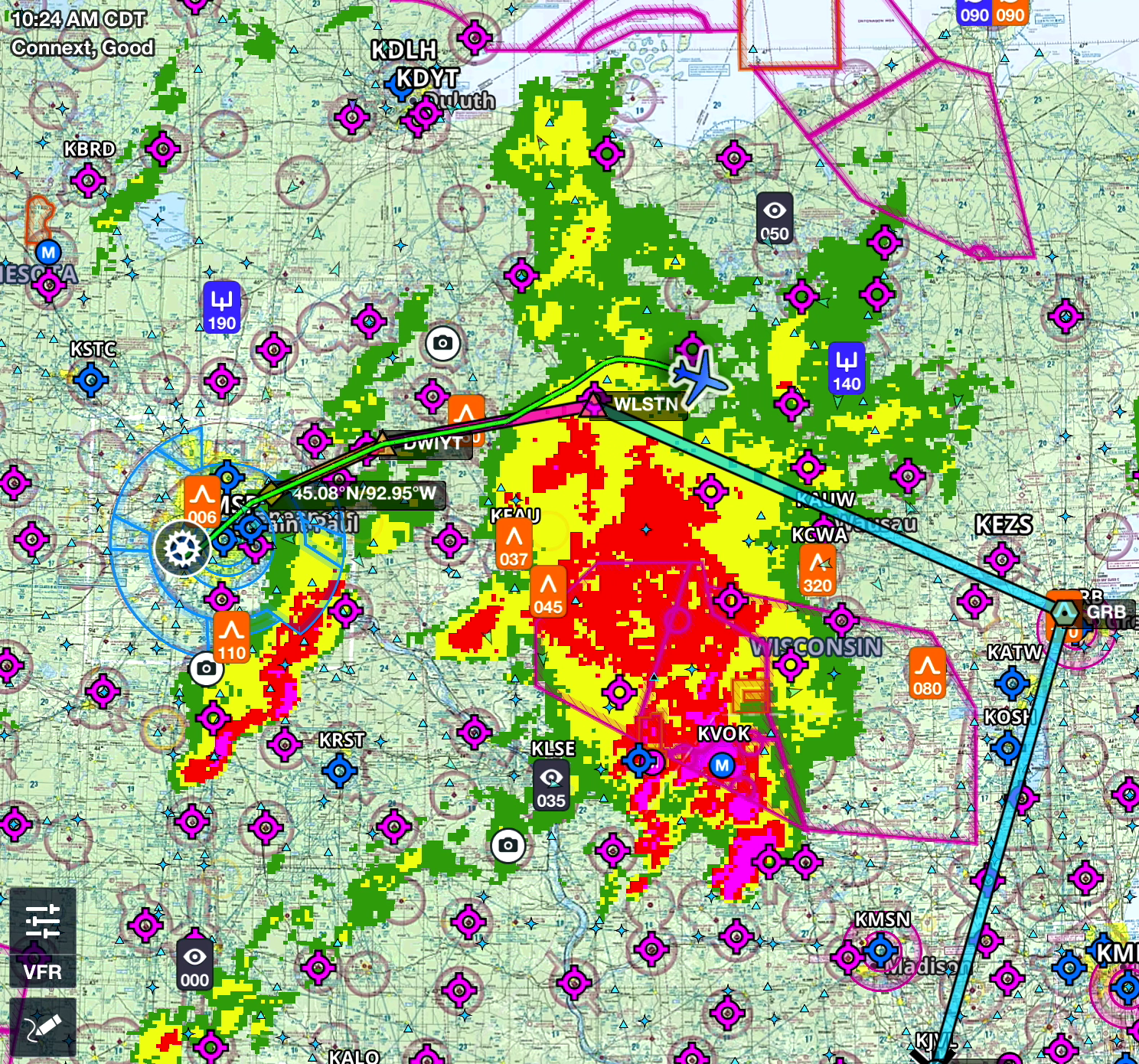
Not a scattered line you thread between. A wall, running from Eau Claire down to Volk Field, with cores in the middle that you cannot fly through, cannot climb over, and cannot negotiate with.
Somewhere on the other side of it, two people had been awake since before dawn and were waiting for me.
What LifeLine Pilots actually does
I fly volunteer missions for LifeLine Pilots, a charity that’s been running since 1981 and is the oldest organization of its kind in the United States. Volunteer pilots fly patients to medical treatment at no cost — our own aircraft, our own fuel, our own weekends. It covers ten states across the Midwest.
The part I didn’t understand until I started flying for them is the relay.
Long trips get handed off. One pilot flies a leg, lands, passes the passengers to the next pilot, and goes home. The system works because the Midwest is full of people with airplanes and a free Saturday, and almost nobody can give up a whole day to fly someone 600 miles and back.
My two passengers had started that morning in Adrian, Michigan — a long way east of anywhere I was going. Another volunteer had already flown them as far as Janesville before I’d finished my coffee.
I had the last leg. 90 minutes, on paper, at the end of somebody else’s very long day.
Going anyway
I lifted off at 9:30 into an overcast that didn’t break until 9000 feet.
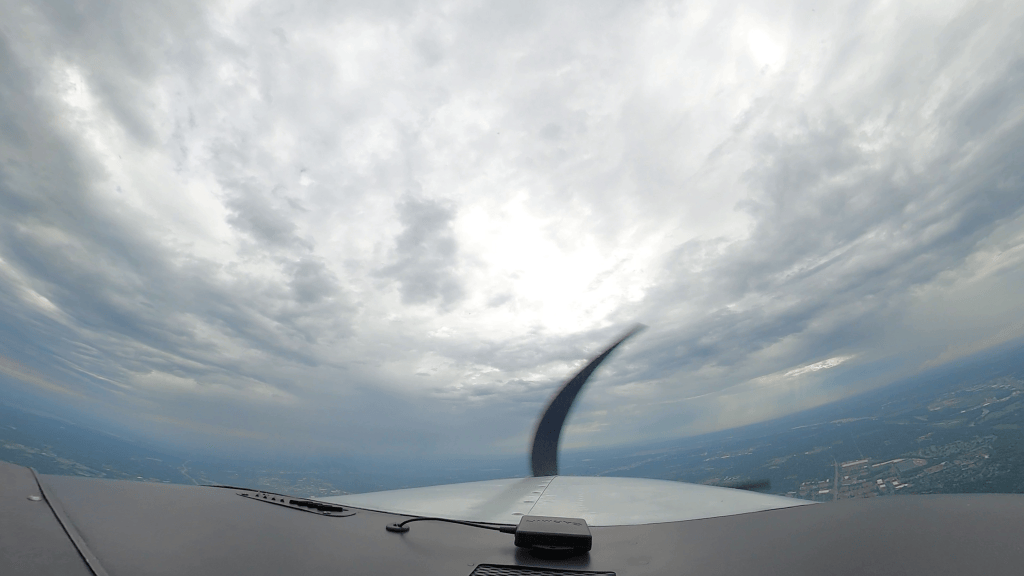
The first half hour was the best flying I’d done all month. Smooth on top, 9000 feet, 193 knots across the ground with 30 knots of tailwind shoving me east. I remember thinking it felt like a gift.
It was the storm. The same system putting that wind behind me was the reason I wasn’t going to be allowed anywhere near my route.
Minneapolis Center started turning me north. Not dramatically — a heading here, a new waypoint there, the polite incremental way that controllers move you around weather without ever announcing that your plan is finished.
And then the numbers on the panel started doing something I had never watched them do before.
The wrong direction
| Time | Position | Time to destination | Distance to next waypoint |
|---|---|---|---|
| 10:28 | abeam Phillips | 1h 43m | 26 nm |
| 10:41 | Tomahawk → Rhinelander | 1h 58m | 59 nm |
| 11:00 | near Antigo | 2h 16m | 105 nm |
Read the third column downward. In 32 minutes of flying, my destination got 36 minutes further away. The fourth column is worse: the next waypoint went from 26 miles to 105 miles.
I was burning fuel, holding altitude, doing everything correctly, and going backwards.
There was a moment north of Tomahawk I keep returning to. I looked at the bottom of the screen and it said the bearing to my next waypoint was 275 degrees — very nearly due west.
I was flying east.
The airplane was telling me, in small white letters, that the place I was supposed to be going was over my left shoulder and receding. And the only way to close that gap was to fly into a level five cell.
Which isn’t a decision. It’s common sense.
Janesville
I landed at 12:10.
Two and a half hours in the air for a ninety-minute flight. 230 miles direct; I’d flown 360 miles. An extra 130 miles of Wisconsin that existed purely because the weather said so.
And then two people walked out to the airplane who had been travelling since before sunrise, who had already flown one leg that morning with a pilot they’d never met, and who were now getting into a second airplane with another one.
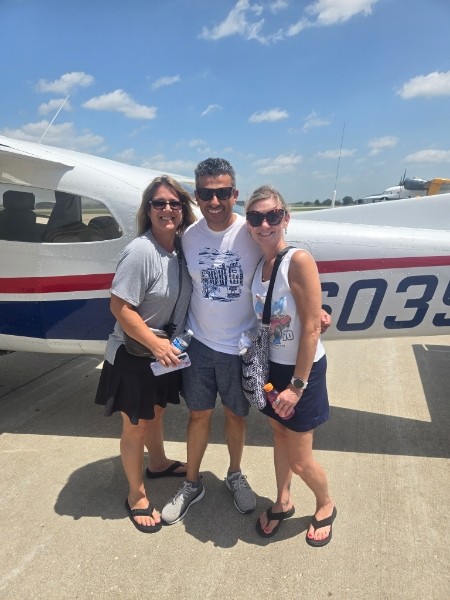
They asked how the flight down had been.
I said it was fine.
That was the right answer, and it was also very nearly true. Nothing had gone wrong. Nothing had been dangerous. I’d simply spent the morning flying a large detour around something I couldn’t argue with, which is the single most ordinary thing that happens in aviation and the hardest one to explain to somebody who just wants to know when they’ll get there.
It wasn’t finished with us
Half hour out of Janesville, Chicago Center came back on the radio.
“…moderate and heavy precipitation about fifteen miles ahead of you… deviation right of course is approved.”
So I turned right and went around it a second time, and said nothing about it to the back of the airplane.
What they got instead was this, somewhere over southern Wisconsin:
Me: “We might get some turbulence along the way.” Passenger: “What’s a plane ride without turbulence, right?” Me: “A boat ride.”
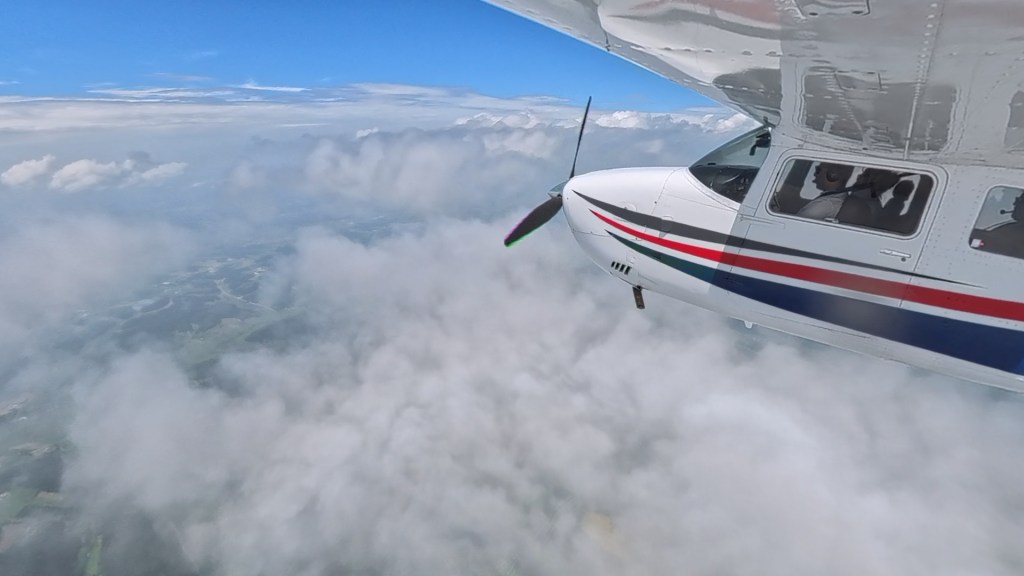
Then it opened up. The Mississippi valley came out from under the cloud, the air went still, and for about forty minutes there was nothing to do but hold a heading and watch Wisconsin turn into Minnesota.
That stretch is the reason people fly small aeroplanes. I’d earned it by then.
Home
We landed at Flying Cloud on runway 28L at 3pm. Two hours from Janesville.
Not ninety minutes.
The same wind that had pushed me around the storm on the way out was sitting on the nose the whole way home. A 140 knots average groundspeed outbound; a 119 coming back. The weather charged me for the tailwind on both ends.
Four and a half hours in the air, across the whole day, to move two people 230 miles.
Why do it
Somebody asked me, somewhere over the river, why I fly these.
I said I like to fly and it gives me an excuse.
That’s the answer you give with passengers in the back, and it isn’t wrong, exactly. I do like to fly. It is an excuse.
But the honest version is that almost nothing else I do in a week has a result this legible. Two people needed to be in Minneapolis. They were in Janesville. Now they’re in Minneapolis. The storm made it take three times longer than it should have, and it changed the outcome not at all — which is, when you think about it, the entire argument for having volunteer pilots in the first place.
The weather gets a vote. It doesn’t get a veto.
If you fly: LifeLine Pilots is perpetually short of volunteers, and because of the relay structure you don’t have to give up a whole weekend to be useful. One leg is a real contribution. lifelinepilots.org
I filmed this one from the wing and the cockpit — if you’d rather watch it than read it, the video is here:
When has going the long way around turned out to be the only way to get there?
Tell me in the comments — I read every one.
Blue skies.


Leave a Reply